
Smoothspeak: AI Dating Coach
SmoothspeakLifestyle
4.544.00 Reviews
- Version
- 1.9.10
- Installs
- 50.00K
- Age Rating
- Mature 17+
Screenshots
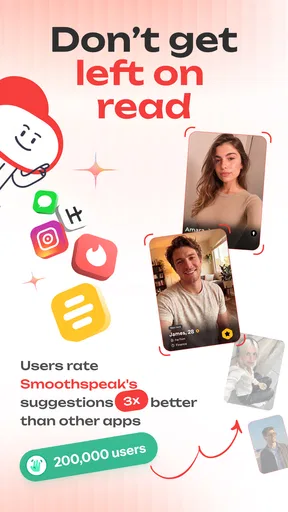
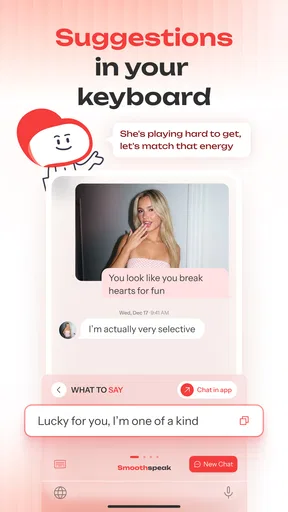
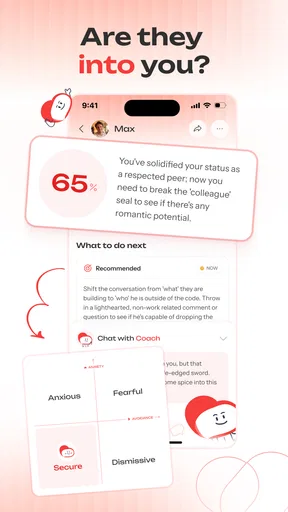
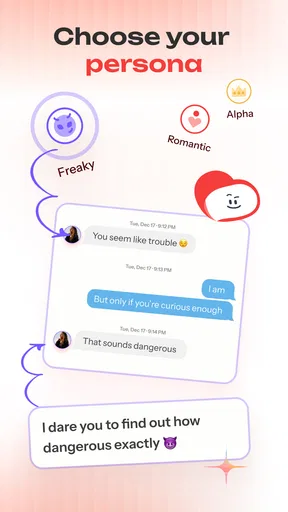
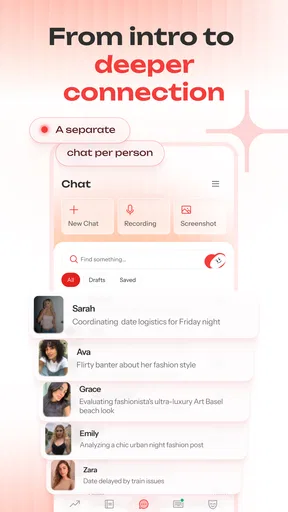
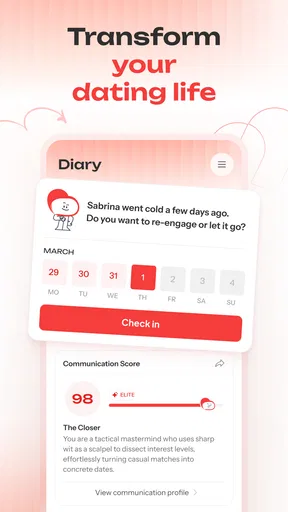
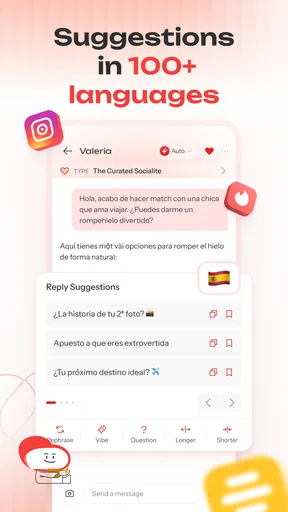
Our Review of Smoothspeak: AI Dating Coach
 Analysis by Appyee
I approached Smoothspeak: AI Dating Coach as a practical lifestyle app rather than a magic solution for dating. Its purpose is easy to understand: help me communicate more thoughtfully when a message, a date, or an awkward pause leaves me unsure what to say. That sounds simple, but the useful part is not getting a polished sentence. The useful part is learning how to turn a vague feeling into a clear, respectful message that still sounds like me.
After spending time with it, I see the app as most valuable for people who overthink texting. It can be a helpful second opinion before sending something important, especially when I am worried about sounding too intense, too cold, or unclear. At the same time, it is not a substitute for judgment, emotional awareness, or an honest conversation. If I use every suggestion word for word, the result can feel less personal. My best experience came from treating its guidance as a draft to consider, not as an answer I had to obey.
Where the real friction begins
The first obstacle is not necessarily technical. It is knowing what kind of help I want. Someone who opens the app expecting it to decide whether another person likes them may feel disappointed. A coaching tool can help me examine wording and possible approaches, but it cannot read another person’s intentions or guarantee a reply. That distinction matters because dating anxiety often turns a small messaging problem into a request for certainty.
I found it more useful to arrive with a specific situation. “What should I say?” is too broad to produce a thoughtful decision. A better starting point is something like, “I enjoyed the date, but I want to suggest meeting again without sounding demanding.” That gives the coaching process a clear emotional goal and a practical boundary. The app becomes more useful when I describe what happened, what I want, and what I do not want to imply.
Another common sticking point is tone. A message can be grammatically perfect and still feel wrong for the relationship. A playful exchange, a first conversation, and a difficult boundary-setting message all need different levels of warmth and directness. I would not judge a suggestion only by whether it sounds smooth. I would ask whether I would actually speak that way and whether it respects the other person’s freedom to respond—or not respond.
The app is aimed at adults, with a Mature 17+ content rating. That is a useful reminder to approach dating advice with appropriate judgment, particularly around sensitive conversations. I would still avoid entering highly private information, intimate images, identifying details, or anything that could expose another person. A coach can help with phrasing without needing a complete personal history.
There is also a difference between wanting reassurance and wanting a plan. If I am repeatedly checking the same message because I am afraid of any possible outcome, more rewrites may increase hesitation rather than solve it. In that situation, the better use is to choose one respectful version, send it once, and accept that the response belongs to the other person. The strongest result comes from using the app to reduce confusion, not to eliminate uncertainty.
Setup checks that prevent avoidable problems
Smoothspeak is free to install, which makes it easy to try without committing money immediately. It comes from Smoothspeak and is listed in the lifestyle category, so I would think of it as a personal communication aid rather than a full dating service. It does not replace the place where a conversation started. If I met someone through another app, I still need to return there to send the final message.
Before relying on it, I would check that the device meets the minimum operating requirement of Android 8.0 or later. That simple check can save time if installation or updating behaves unexpectedly. The current version is 1.9.10, and keeping an app current is generally sensible when a problem appears after installation, although an update should not be treated as a guarantee that every issue will disappear.
I would also look at the store page before confirming any optional purchase. The app is free, but in-app purchases range from $2.99 to $49.99 per item. That is a wide enough range that I would not tap through a payment screen casually. I would read the wording on the specific offer, check whether it is something I genuinely need, and make sure the purchase fits the way I plan to use the app. A short trial of the free experience is the sensible first step.
My preparation would be deliberately modest. I would write down the basic context in my own words, remove names and identifying details, and decide what outcome I actually want. For example, do I want to apologize, invite the person out, clarify a misunderstanding, or end contact kindly? Those goals should not be mixed together. A message that tries to explain everything, ask for reassurance, and arrange another date at once can become confusing even after careful editing.
One useful habit is to create two drafts before asking for help: the emotional draft and the sendable draft. The first can contain frustration, excitement, or uncertainty. The second should contain only what the other person needs to understand. Comparing them helps me see whether I am asking the recipient to manage feelings that I should process separately. This is a more valuable workflow than endlessly searching for a perfect line.
I would also decide in advance what information I will not share. The app may be useful with a summary such as “we have exchanged messages for a week and postponed twice,” but it does not need a full name, workplace, address, phone number, or screenshots containing private details. Cropping or rewriting a conversation takes a little longer, yet it keeps the exercise focused on communication rather than personal exposure.
Recovering when a conversation or suggestion goes wrong
When a suggestion does not fit, I would not keep pressing for variations without explaining why. I would identify the problem: too formal, too flirtatious, too long, too apologetic, or unlike my normal voice. That kind of correction is more useful than simply asking for “better” wording. It turns the process into editing with a purpose.
If the app seems to misunderstand the situation, I would start a cleaner request rather than adding more and more explanations to the original one. A compact summary works well: what happened, what I want, the tone I prefer, and the boundary I need to keep. This also makes it easier to compare alternatives. I can then choose the version that sounds natural instead of becoming attached to the first response.
A practical recovery method is to separate the message into three parts: acknowledgment, intention, and invitation or boundary. For an invitation, that might mean acknowledging the enjoyable conversation, saying I would like to meet again, and offering a simple option without pressure. For a boundary, it might mean naming what does not work for me, stating what I will do next, and avoiding a long argument. This structure helps even when I decide not to use the exact wording suggested.
Another trap is editing away all personality. If I remove every informal phrase, joke, or small imperfection, the final text may sound like it came from a template. I prefer to keep one or two details that genuinely belong to the conversation, provided they are kind and relevant. The app can help me notice ambiguity, but I should restore my own voice before sending anything.
There is a more serious recovery case: when the other person has clearly asked for space or has stopped engaging. No wording tool should be used to manufacture another opportunity to push past that signal. The appropriate action may be to send nothing. In my view, this is one of the most important limits of dating coaching. Better phrasing is not permission to ignore a boundary.
If the app itself is not behaving as expected, I would use ordinary checks first. I would confirm that the internet connection is stable, close and reopen the app, and make sure the operating system is supported. If a response appears incomplete, I would simplify the request and try again rather than pasting a large amount of conversation. I would also avoid making a purchase while troubleshooting, since paying for something does not explain or automatically fix a basic setup problem.
When Smoothspeak is not the cause of the problem
Sometimes the uncomfortable result comes from the situation, not the wording. A person may be busy, uncertain, distracted, or simply not interested. Even an excellent message cannot control that. I have found it healthier to use coaching to make my intention clear and respectful, then judge the situation by the other person’s consistent behavior rather than by one delayed reply.
The app is also not the right tool for every relationship problem. If there is manipulation, harassment, coercion, threats, or a serious safety concern, polished text is not the main solution. I would step away, seek help from someone I trust, and use the safety tools available through the relevant platform or local services. Dating advice should never encourage me to stay in a situation that feels unsafe just because a message could be improved.
It is less suitable for people who want a complete dating ecosystem. Someone looking for profiles, matching, video calls, or an inbox will need a conventional dating platform instead. Smoothspeak fits before or between those activities: I can use it to think through a message, but it is not where the relationship itself develops. That narrower role is a strength for focused communication and a limitation for anyone expecting an all-in-one service.
I would also skip it if I already communicate comfortably and do not enjoy outside input. Adding a coaching layer can make a natural exchange feel overmanaged. Likewise, people who want professional counseling should not treat a lifestyle app as therapy. It may help organize thoughts around a conversation, but it cannot assess mental health, resolve attachment patterns, or replace a qualified professional.
Compared with writing in a notes app, Smoothspeak offers a more directed way to examine dating language. Notes are better when I want complete privacy or already know how to structure my thoughts. Compared with asking a friend, the app is available without making the situation social, while a trusted friend may understand my personality and history better. Compared with copying a generic internet template, it encourages me to work from my own context, but I still need to reject anything that feels artificial.
The most useful trade-off is speed versus authenticity. A quick suggestion can get me unstuck, but a slower self-edit usually produces a message I can stand behind. I would not open it for every ordinary “good morning” text. I would use it for moments where the wording has consequences: following up after a promising date, addressing mixed signals, expressing interest clearly, or ending a connection without unnecessary cruelty.
Everyday workflows that make the app worthwhile
Imagine I had a pleasant first date on Saturday and want to follow up the next day. My first draft might be enthusiastic but vague. I could use the app to test whether the message communicates interest and includes a clear next step. Then I would shorten it, keep a detail from the actual date, and offer a specific but low-pressure invitation. The app helps me move from nervous enthusiasm to a message the other person can answer easily.
A different scenario is a conversation that has become one-sided. Instead of asking for a clever way to regain attention, I would use the app to draft one direct check-in and decide what I will do if there is no response. The important insight is not the sentence itself; it is the stopping rule. Without one, coaching can become a loop of increasingly elaborate follow-ups.
For a difficult cancellation, I would ask for help making the message considerate without overexplaining. I would include the necessary information, apologize once if appropriate, and suggest a realistic alternative only if I genuinely want to reschedule. This avoids a common mistake: using excessive explanation to persuade someone that my reason is valid. Clear communication does not require a courtroom defense.
For a boundary, I would draft privately first and then check whether the wording is firm enough. I would remove insults, accusations, and invitations to debate. If the other person responds by challenging the boundary, I would not assume another rewrite will fix the dynamic. Sometimes the right workflow ends with no further message.
One advanced habit I recommend is keeping a personal “voice filter.” I would note a few qualities that describe how I normally communicate—warm, concise, playful, direct—and use those as criteria when reviewing suggestions. I would also decide which phrases I never use. This prevents the app from gradually replacing my natural style with language that may sound polished but unfamiliar.
Another useful check is reversibility. Before sending, I ask whether the message would still feel acceptable if the person replied briefly, declined, or showed it to a friend. If the answer is no, I revise the emotional risk rather than merely improving grammar. This is where my own judgment matters more than any generated wording.
After using the app, I would wait before sending an emotionally charged message. A short pause can reveal whether I am communicating a real intention or reacting to fear. The app can help me phrase the result, but it cannot create the pause for me. That small separation between feeling and action is one of the practical benefits I took from the experience.
My practical verdict
Smoothspeak is a focused, free lifestyle app for adults who want help thinking through dating messages. With an average rating of 4.5 from around 5.7 thousand ratings and over 50 thousand installs, it has attracted meaningful interest, while its relatively narrow purpose remains clear. I would recommend it to someone who regularly freezes before sending a message, struggles to set a respectful boundary, or wants a second opinion without immediately asking friends.
I would not recommend treating it as an oracle for romantic outcomes. It cannot make another person interested, turn an unhealthy situation healthy, or guarantee that a carefully written message receives an answer. The Mature 17+ rating also makes it sensible to keep the conversations adult, respectful, and free of unnecessary private details. Anyone considering optional purchases should review each offer carefully, since the available in-app items span from $2.99 to $49.99.
My final recommendation is to use it in a three-step loop: describe the situation briefly, ask for help with one clear goal, and rewrite the result in my own voice. Then I send—or choose not to send—based on the person and the circumstances, not on the confidence of the wording. For me, its real value is turning anxious overthinking into a clearer decision while leaving responsibility where it belongs: with the person communicating.
Verdict
Strengths of Smoothspeak: AI Dating Coach
- Personalized AI suggestions help improve dating messages and replies.
- Useful conversation guidance for users who struggle with opening lines.
- Can help identify overly direct, vague, or awkward wording before sending.
- Available anytime, making quick advice convenient during active conversations.
- Simple coaching format is approachable for people new to online dating.
Limitations of Smoothspeak: AI Dating Coach
- AI advice may sound generic or fail to match your personal communication style.
- Sharing private dating chats may raise privacy concerns for cautious users.
- Suggestions can encourage overly polished messages that feel less authentic.
- The app cannot accurately judge tone, chemistry, or the other person’s intentions.
- Useful features may be restricted by subscriptions, limits, or in-app purchases.
Similar Picks in This Category
View All
SmartThings
Samsung Electronics Co., Ltd.4.6

Google Home
Google LLC4.0

Pinterest4.2

Astrotalk - Talk to Astrologer
Astrology & Horoscope4.7

My Verizon
Verizon Consumer Group4.5

Samsung Wallet (Samsung Pay)
Samsung Electronics Co., Ltd.4.1
Frequently Asked Questions
What is Smoothspeak: AI Dating Coach and how does it work?
Smoothspeak: AI Dating Coach is designed to help users improve their dating conversations and communication skills. You can use it to review messages, generate possible replies, practice opening lines, and receive suggestions about tone, clarity, and confidence. It is best viewed as a writing and coaching assistant rather than a replacement for genuine conversation or personal judgment.
Can Smoothspeak create replies for dating apps and text messages?
Yes, Smoothspeak can help you draft responses for dating-app chats, text messages, and other romantic conversations. You generally provide the message or describe the situation, then the app suggests replies based on the context and tone you want. Before sending anything, review the result carefully, since an AI-generated response may sound too formal, generic, or unlike your natural personality.
Does Smoothspeak guarantee better matches or successful dates?
No dating coach can guarantee matches, replies, or successful dates, and Smoothspeak is no exception. The app may help you communicate more clearly, avoid awkward wording, and feel more prepared, but dating outcomes depend on compatibility, timing, honesty, and the other person’s choices. Use its suggestions as ideas, while keeping your messages authentic and respectful.
Is my personal and dating information safe when using Smoothspeak?
Before sharing private conversations, photographs, names, phone numbers, or identifying details, review Smoothspeak’s privacy policy and the permissions requested by the app. AI coaching services may process submitted text to provide recommendations, and data-handling practices can vary by provider and subscription plan. For better privacy, remove sensitive information and avoid uploading anything you would not want stored or reviewed.
Is Smoothspeak free to download, or does it require a subscription?
Smoothspeak may be available to download without an upfront charge, but some coaching tools, advanced suggestions, usage limits, or premium features can require in-app purchases or a recurring subscription. Check the current Google Play or App Store listing for pricing, trial conditions, renewal terms, and cancellation instructions before starting a trial. Availability and costs may differ by country and platform.
